How to choose a special needs stroller for a child with cerebral palsy
An ordinary pushchair stops working when a child grows or cannot hold the trunk. Here is how special needs strollers differ and what to look at when choosing one.
reha.uz ·
A special needs stroller is not just a bigger pushchair. It holds the child in a good posture for hours: on walks, in the queue at the doctor's, in the car on the way to therapy. Breathing, digestion, the hips and the spine all depend on it.
What to look at
- Adjustable seat depth and width, so the stroller grows with the child for several years.
- Tilt-in-space, or at least a reclining back, so the child can rest without sliding down.
- Trunk supports, vest, abduction straps: the set depends on how well the child holds the trunk (see our guide to GMFCS levels).
- Wheels: large ones with suspension for our pavements and kerbs; swivel front wheels make steering easier.
- Folding and weight: will it fit your car boot, and can you lift it on your own?
The main types
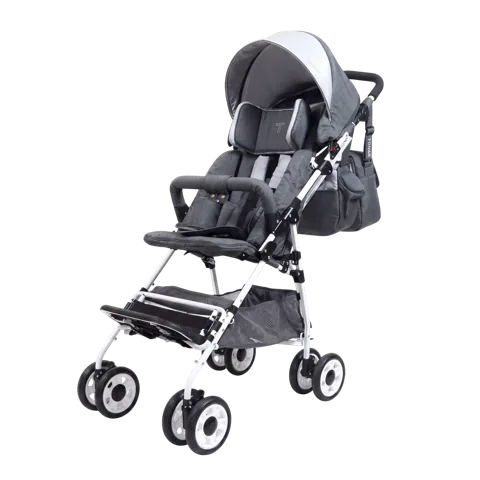
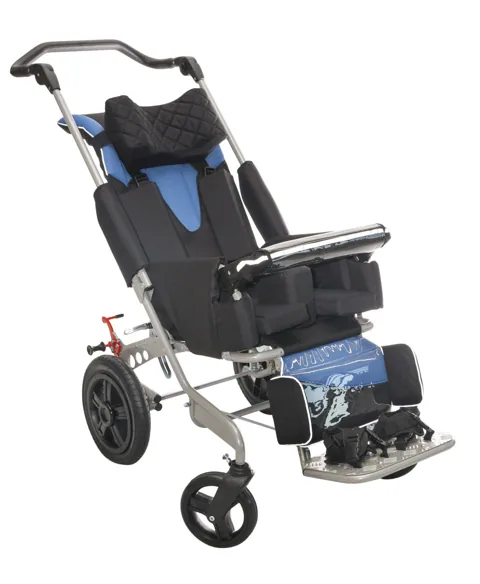
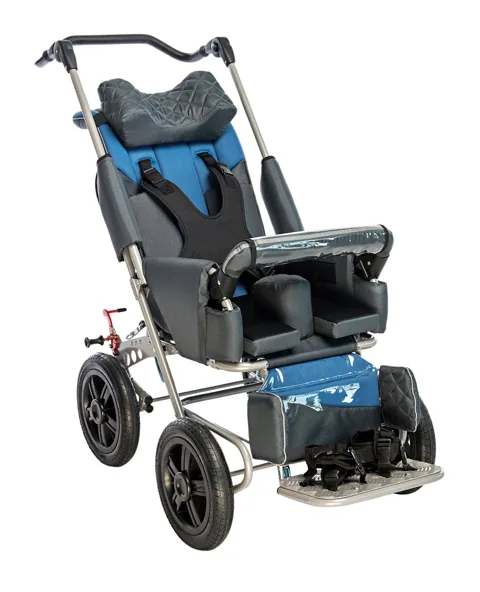
- Racer and Racer+ (Akces-Med): all-rounders with good posture, a resting position and 4 sizes. Racer+ has swivel front wheels.
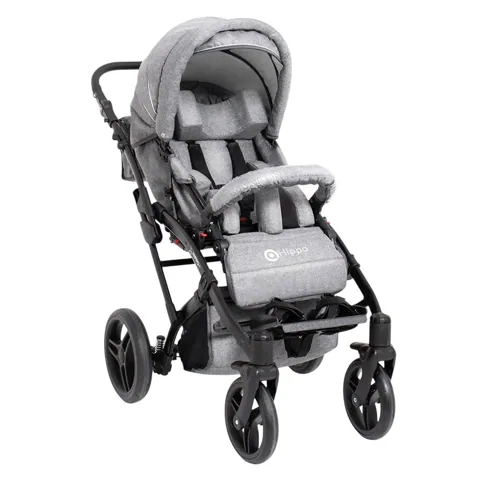
- Hippo: looks like an ordinary pushchair, the seat can face the parent, gas-spring tilt.
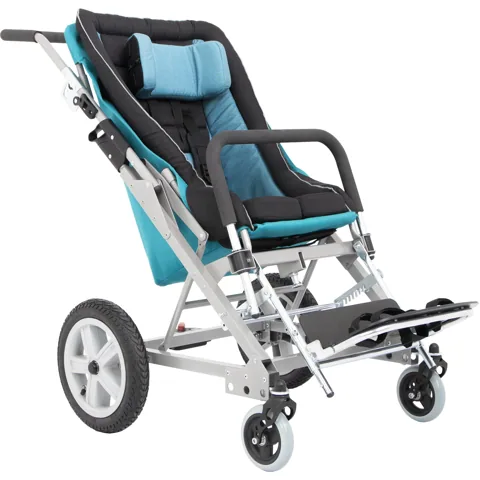
- Nova and Nova Evo: deep seat, good for marked spasticity.
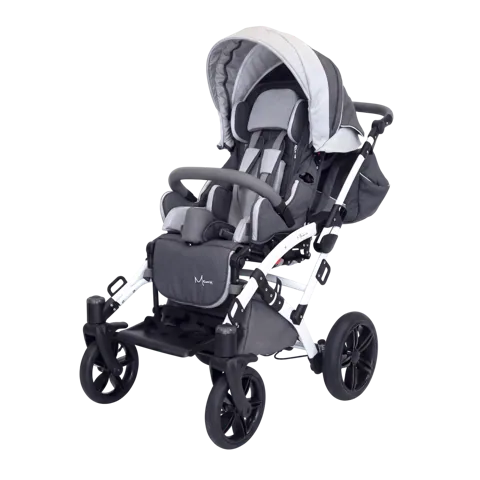
- MyWam Pegaz: very light (about 10 kg) for children who sit well and travel a lot by public transport.
An indoor version
At home a child is often more comfortable in an indoor chair on small castors (Racer Home, Nova Home) that rolls up to the table. Many families get both a stroller and an indoor chair.
Not sure which one fits? Visit our showroom in Tashkent and try the stroller with your child, or send us height, weight, age and diagnosis and we will choose the model, size and set.
This guide helps you prepare for a conversation with a doctor or therapist; it does not replace their advice.