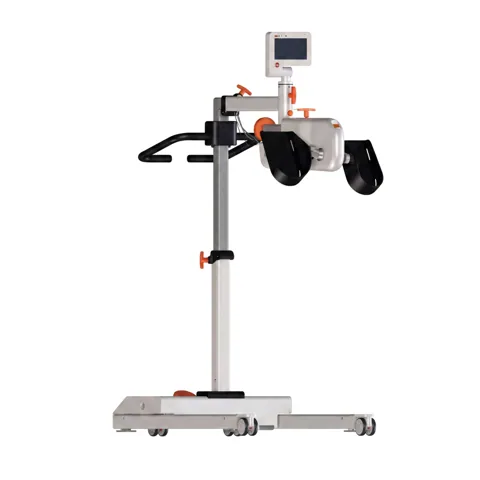
Leg and arm trainers after a stroke: who they help and how to exercise at home
A motorised trainer such as MOTOmed lets a person move every day, even with almost no strength. Here are the modes, who benefits and how to choose a model.
reha.uz ·
After a stroke the most important thing is to move often and regularly. But with a paralysed arm or leg an ordinary exercise bike is impossible, and the therapist does not come every day. A motorised trainer fills that gap: you can exercise at home for 20–30 minutes several times a day.
Three modes
- Passive: the motor turns the pedals for the person. It reduces spasticity, keeps the joints mobile and improves circulation.
- Motor-assisted: the person pedals and the motor adds exactly what is missing (on MOTOmed this is ServoCycling).
- Active: the person works against resistance, like on an ordinary trainer.
During a spasm the sensors stop the pedals and reverse the direction until the muscles relax. The screen shows how evenly the left and right sides work, which motivates the person to use the weaker side.
Which model
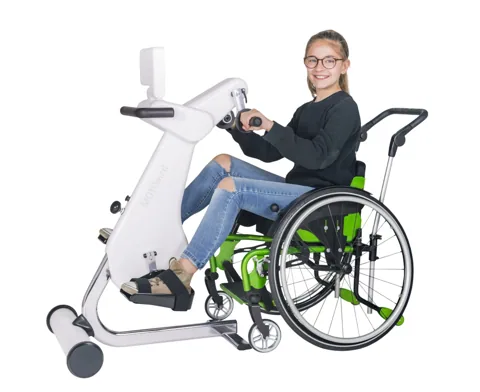
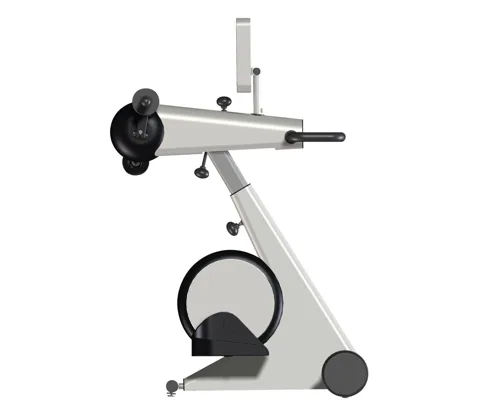
- The person sits in a wheelchair or on a chair: MOTOmed loop.la, legs and arms on one trainer.
- The person is still in bed: MOTOmed layson.la, wheeled up to the bed.
- A rehabilitation centre with many patients: MOTOmed muvi, legs and arms at the same time.
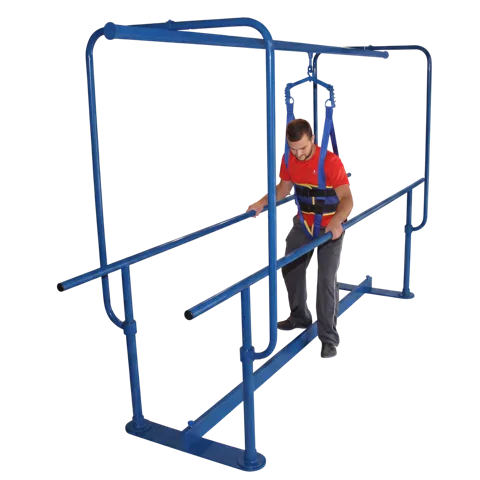
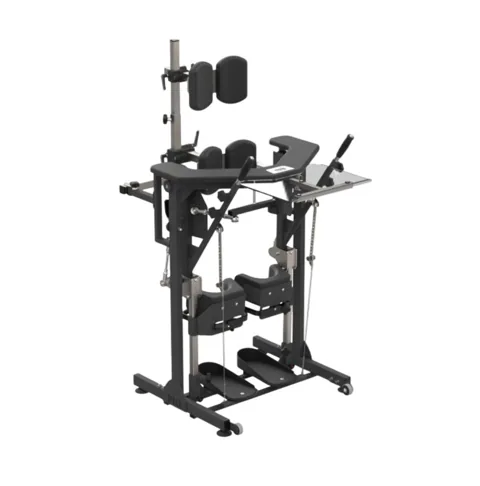
- Already trying to stand and walk: the PIO walk simulator or parallel bars with a harness.
How to exercise
Start with the passive mode and short sessions, then add active work step by step. Agree the programme and load with a doctor or therapist, especially with blood pressure or heart problems.
We will show the trainer in our showroom and help you choose accessories (hand fixation, leg guides) for your case.
This guide helps you prepare for a conversation with a doctor or therapist; it does not replace their advice.