What support does my child need? GMFCS levels in plain words
Doctors describe the motor abilities of children with cerebral palsy on the GMFCS scale. Here are the five levels and how to use them to choose a chair, stroller or tricycle setup.
reha.uz ·
When you choose an adaptive chair, a stroller or a walker, the key question is not "which model is best" but "how much support does my child need". Therapists around the world answer it with the GMFCS scale (Gross Motor Function Classification System). The level is often written in the medical report; if not, ask your neurologist or therapist.
The five levels in short
- I: walks without limits; running and jumping are harder.
- II: walks alone, but needs help or support for long distances and uneven ground.
- III: walks with a walker or crutches; outdoors usually uses a stroller or wheelchair.
- IV: moving alone is very limited; sits with trunk support.
- V: needs full support of head, trunk and pelvis; moves only in a wheelchair.
How this turns into a setup
On product pages we offer ready-made sets by support level, so you do not have to pick every strap yourself.
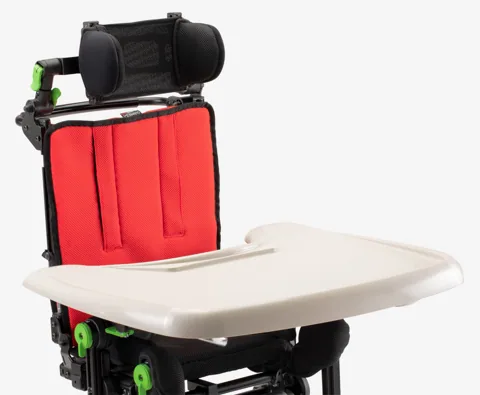
- "Sits and holds the head well" (about II–III): tray, footrests, canopy for walks.
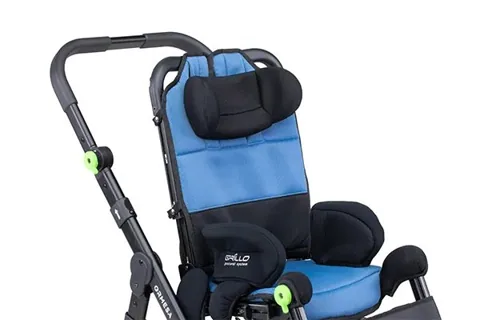
- "Needs trunk support" (III–IV): lateral supports, vest or trunk belt, pelvic belt.
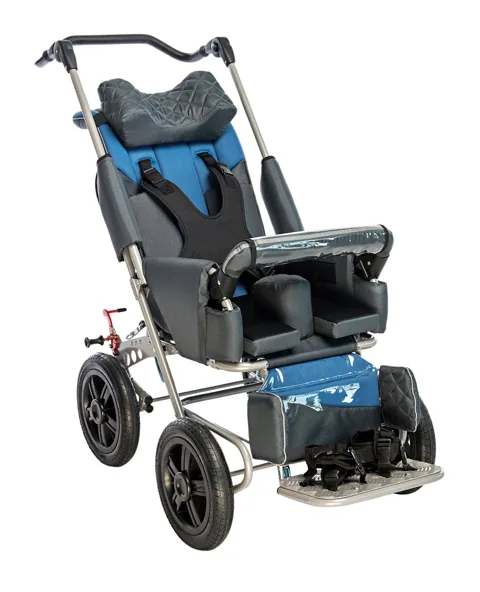
- "Needs full support" (IV–V): postural headrest, wrap-around supports, abduction block between the knees, harness.
Size matters more than the set
A seat that is too big does not hold the child; one that is too small is soon outgrown. Before ordering, measure height, hip width when seated, thigh length (from the back to the back of the knee) and lower leg length. If you are unsure, send us these numbers, the age and a photo of your child sitting: we will choose the size and set.
The GMFCS level is a guide, not a verdict. Children change, and good equipment adjusts with them: supports can be added or removed later.
This guide helps you prepare for a conversation with a doctor or therapist; it does not replace their advice.